
Category B Driving Licence Cyprus - Everything You Need to Know
 9 June 2026 · Matthieu Tissot
Category B is the standard car licence in Cyprus. It lets you drive passenger vehicles up to 3,500 kg with up to 8 passengers. If you are new to Cyprus or starting from scratch, this guide covers everything you need.

Cyprus drives on the left, just like the UK. The roads here can surprise newcomers - narrow village streets, fast dual carriageways, and roundabouts that follow their own local logic. Getting your Category B licence properly means you understand the rules before you are out there alone. This guide walks you through every step, from the first piece of paperwork to the day you pass your test.
What does Category B cover?
Category B is what most people mean when they say "a driving licence." In Cyprus, it authorises you to drive a motor vehicle with a maximum weight of 3,500 kg and a seating capacity of up to 8 passengers, not counting the driver. That covers almost every standard car, estate, SUV, and small van you will see on the road day to day.
What it does not cover is heavier vehicles, minibuses with more than 8 passenger seats, buses, or trucks. Those require different categories - C, D, and others. For most people living and working in Cyprus, though, Category B is the only licence they will ever need.
One practical point worth knowing: a Category B licence from Cyprus is recognised across all EU member states. So if you earn your licence here and later move to France, Germany, or anywhere else in the EU, you do not start again. You exchange it. If you already hold an EU licence and are wondering whether you need to go through this whole process, check the article on exchanging an EU licence first - you may have a simpler route.
Cyprus issues Category B licences through the Department of Road Transport. There are five offices across the island: Nicosia (the headquarters), Limassol, Larnaca, Paphos, and Paralimni. You go to the office that covers the area where you live. That is also the city where your practical test will be held.
For a broader overview of the whole process before you read further, the step-by-step driving licence guide is a good place to start.
What is the minimum age and what are the requirements?
The minimum age to apply for a Category B licence in Cyprus is 18. There are no provisional younger-age schemes like the one in the UK. You must be 18 before you can apply for a learner's licence, and you must hold that learner's licence before you can start formal lessons with an instructor.
Beyond age, here is what you will need to bring to the Department of Road Transport:
- A valid passport or national ID card
- Proof of Cyprus residence (a utility bill, rental contract, or similar document)
- A recent passport-style photograph
- A medical certificate from a registered doctor confirming you are fit to drive
The medical certificate is not just a formality. The doctor checks your eyesight, general health, and any conditions that could affect your ability to drive safely. Make sure you visit a registered doctor - not every clinic will issue the right form.
If you are not a Cyprus citizen, the process has a few extra layers. The licence guide for foreigners explains the specific requirements for non-EU nationals and residents. Some people find the language barrier the biggest hurdle. The good news is that the Department of Road Transport does provide services in English, and you can take your theory test in English too.
Fees apply at various stages of the process. Check current fees with the Department of Road Transport, as these can change. Do not rely on figures you find in Facebook groups - they are often out of date.
How do you get a Category B learner's licence?
The learner's licence is called an εκπαιδευτική άδεια in Greek. You apply for it in person at your local Department of Road Transport office. Bring all the documents listed above. Staff will check them, take your details, and issue the learner's permit if everything is in order.
Once you have the learner's licence, you are not yet allowed to drive on your own. It is a permit to learn - nothing more. You can only drive when accompanied by a licensed instructor, in a dual-control vehicle, on official lessons. Driving unsupervised with a learner's licence is illegal and will cause serious problems if you are stopped.
The learner's licence is the gateway to everything else. Without it, no driving school can officially enrol you for lessons, and you cannot book your theory test. Get this step done first.
Category B: vehicles up to 3,500 kg, up to 8 passengers. Valid across all EU states.
The Department of Road Transport offices are open on weekdays. Go early if you can - queues build up through the morning, especially at the Nicosia headquarters. The Paralimni and Paphos offices tend to be quieter. Bring originals and photocopies of all your documents. Staff sometimes ask for both.
What do your driving lessons cover?
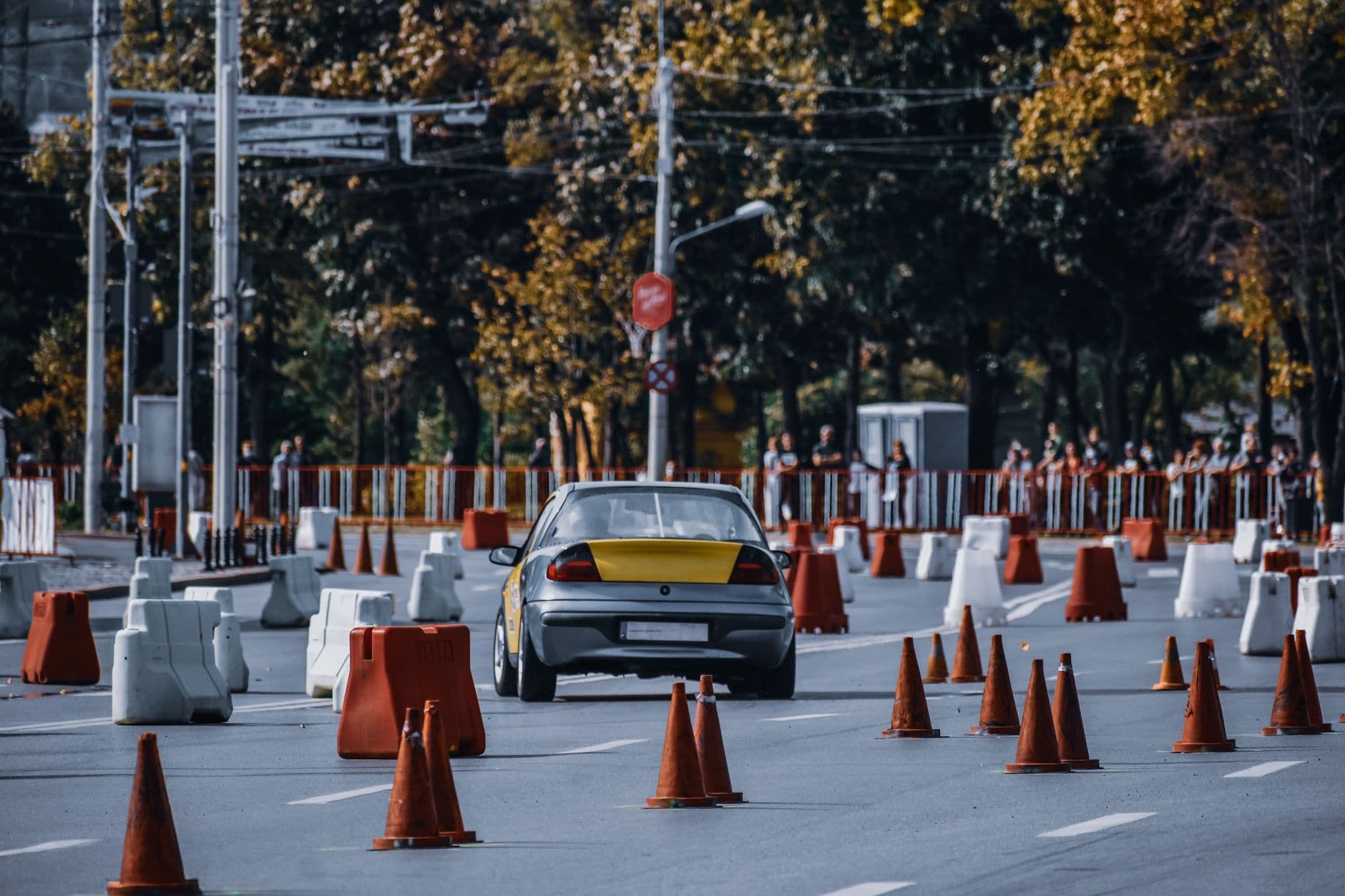
All lessons must be taken with a licensed driving instructor in a dual-control car. The car must display red L plates on the front and rear. These are not optional. If you are spotted on the road in a lesson car without proper L plates, it can cause trouble for both you and your instructor.
Lessons cover everything from basic vehicle control - steering, braking, gear changes - to more complex skills like motorway driving, roundabouts, and parking. Your instructor will also make sure you understand Cyprus-specific road rules, because there are a few habits local drivers have that you will need to know about.
There is no fixed minimum number of hours required by law before you can take the practical test. In practice, most instructors recommend between 30 and 40 hours for a complete beginner. Some people need more, some fewer. Your instructor will tell you honestly when they think you are ready.
If you are based in the capital and looking for a school, the list of driving schools in Nicosia can help you find a licensed instructor near you. Prices vary between schools. Ask about lesson packages before you commit.
Your instructor will also guide you on when to book the theory test. Most people sit the theory test before completing all their practical hours. The two processes can run in parallel.
What is the Category B theory test like?
The theory test is called the γραπτή εξέταση. It is a written exam that covers road signs, traffic rules, and safe driving behaviour. You can take it in Greek or in English. For most foreigners living in Cyprus, English is the obvious choice.
Are you ready for the test?
Answer 3 questions to find out
Question 1 of 3
How many driving lessons have you completed?
The test is held at the Department of Road Transport. Your driving school will usually help you book it, or you can contact the department directly. You need your learner's licence to sit the test.
The questions are multiple choice. They test whether you know what road signs mean, how to behave at junctions, what to do in an emergency, and how safe driving principles apply in real situations. The question bank is not published openly, but your driving instructor and school will have practice materials.
Preparing properly matters. Do not assume that because you have driven for years in another country you will pass easily. Cyprus uses EU-standard signs, but the rules around priority, pedestrian crossings, and speed limits have specific local applications. Take the practice tests seriously.
If you fail, you can resit the test. There is a waiting period between attempts. Check current fees with the Department of Road Transport for resit costs. Passing the theory test is required before you can book your practical test. You cannot sit the practical without a theory pass.
What happens at the Category B practical test?
The practical test is conducted by an examiner from the Department of Road Transport. It takes place on real public roads in your city - not a closed course. This is important. You will be driving in actual traffic, not a controlled environment.
The examiner will ask you to do various things during the test: pull away from the kerb, follow road signs, handle junctions, deal with roundabouts, reverse, and park. They will also check that you do proper mirror and blind-spot checks before every manoeuvre.
The test starts and ends at the local Department of Road Transport office. The examiner sits beside you. Your instructor is not in the car during the test. That is deliberate - it is your ability being assessed, not your instructor's guidance.
Common reasons people fail include not checking mirrors consistently, hesitating too long at junctions, and poor positioning on roundabouts. Cyprus roundabouts work on a give-way-to-the-right principle. If you are not solid on this before the test, practise until you are.
If you fail, you can book a resit. There is no limit on the number of attempts, but each one costs money and time. Your instructor will debrief you after the result is known and help you understand what to work on.
ClickClickDrive Cyprus is a resource that can help you find driving schools and prepare for each stage of the test process.
Can you tow with a Category B licence in Cyprus?
Yes, but there are limits. A Category B licence allows you to tow a trailer, but only up to a certain combined weight. When the total weight of the vehicle plus the trailer goes beyond the limit set for Category B, you need an additional licence category - specifically BE.
The BE category is an extension of B. It covers heavier trailer combinations that fall outside what a standard Category B licence allows. If you plan to tow a large caravan, a horse trailer, or a heavy boat trailer, check the combined weights carefully before you assume your Category B is enough.
In practice, many people tow small trailers - garden waste trailers, small luggage trailers, light bike carriers - without any issue under Category B. The problems arise with heavier loads. Do not guess at the weights. Check the vehicle's towing capacity plate and the trailer's gross weight before you hook anything up.
If you are ever unsure whether your intended tow falls within Category B limits, the Department of Road Transport can give you a definitive answer. Do not rely on what a friend told you. Towing over your licence category on a public road is a traffic offence.
How long is your Cyprus Category B licence valid and when must you renew?
A Cyprus Category B licence does not last forever. The validity period depends on your age at the time of renewal. Younger drivers typically receive a licence valid for a longer period. As you get older, renewal intervals become shorter - this is standard across the EU and reflects the medical check requirements that come with age.
When your licence is due to expire, you will need to renew it at the Department of Road Transport. Renewal is not automatic. You need to apply, provide an updated medical certificate, and pay the renewal fee. Check current fees with the Department of Road Transport.
Do not let your licence expire without renewing it. Driving on an expired licence in Cyprus is treated as driving without a licence. The fines are real, and if you are involved in an accident with an expired licence, your insurance may refuse to pay out.
If you obtained your licence in another EU country and moved to Cyprus, you are required to exchange it for a Cyprus licence after taking up residence. The exchanging an EU licence guide covers this in detail. Non-EU licence holders have a different process and different timelines.
Keep a reminder in your phone or calendar for your licence expiry date. It is easy to forget, especially if life gets busy. Renewal takes time to process, so start the paperwork well before the expiry date arrives.
Getting a Category B licence in Cyprus takes time and effort, but the process is straightforward once you know what to expect. Get your documents ready, find a good instructor, and take the theory preparation seriously. Thousands of people from all over the world go through this every year in Cyprus. With the right preparation, you will too.
About the Author

Co-Founder, ClickClickDrive
Matthieu is Co-Founder and CMO of ClickClickDrive, a marketplace that makes finding the right driving school effortless for learners across Europe. He built the platform from zero to over 2.5 million monthly organic visitors, reaching 30% B2C market share in Germany.
FAQ
What vehicles can I drive with a Category B licence in Cyprus?
A Category B licence covers motor vehicles up to 3,500 kg with up to 8 passenger seats, not counting the driver. This includes standard cars, SUVs, and small vans. It does not cover larger vehicles, minibuses, or trucks.
Can I take the Cyprus driving theory test in English?
Yes. The theory test can be taken in Greek or in English. Most driving schools have practice materials in both languages, and the Department of Road Transport accommodates English-speaking candidates at all five offices.
Do I need a Cyprus licence if I already have one from an EU country?
If you are resident in Cyprus, you are required to exchange your EU licence for a Cyprus one. The good news is that this is usually a straightforward exchange rather than starting from scratch. The process is explained in detail in the [licence guide for foreigners](/en/blog/how-to-get-driving-licence-cyprus-foreigner).
How many driving lessons do I need before the practical test in Cyprus?
There is no legally fixed minimum number of lessons. In practice, most instructors recommend between 30 and 40 hours for a complete beginner. Your instructor will advise you based on your progress and tell you when they think you are ready to sit the test.
What happens if my Cyprus driving licence expires?
Driving on an expired licence is treated the same as driving without a licence. You must renew before it expires by visiting your local Department of Road Transport office, providing a fresh medical certificate, and paying the renewal fee. Check current fees directly with the department, as they are updated periodically.