
How to Get a Driving Licence in Cyprus - Step by Step
 9 June 2026 · Matthieu Tissot
You can get a driving licence in Cyprus by going through a learner's licence, theory test, and practical test - all managed by the Department of Road Transport. The process takes most people several months from start to finish. If you already hold a licence from another country, the rules may be different for you.

Getting a driving licence in Cyprus is very doable, but the process has several steps and you need to do them in the right order. Many people get stuck early because they miss a document or skip ahead. This guide walks you through every stage, from the very first visit to the Department of Road Transport all the way to holding that pink EU licence card.
What do you need before you start?
Before you do anything else, you need to gather your documents. The Department of Road Transport will not process your application without all of them. Missing even one means a wasted trip.
Driving Licence Cost Calculator
Estimates only. Current fees are set by the Department of Road Transport and may change.
Here is what you need:
- A valid passport or national ID card
- Proof of Cyprus residence - this can be a rental contract, a utility bill in your name, or your yellow slip (ARC - Alien Registration Card)
- A recent passport-style photo
- A medical certificate from a registered doctor in Cyprus
The medical check is straightforward. A general practitioner confirms that your eyesight and general health are good enough to drive. It is not a deep medical exam, but you do need the official form signed and stamped.
The minimum age for a Category B licence - that is the standard car licence - is 18. If you are not yet 18, you will need to wait before applying.
One thing worth knowing: these rules apply only in the Republic of Cyprus, which covers the south of the island. Northern Cyprus operates under a completely separate system and is not covered here.
If you moved to Cyprus from abroad, the process may vary slightly depending on where your previous licence was issued. There is a detailed licence guide for foreigners that covers the extra steps involved. If you already hold an EU licence, you may not need to go through all of this - read about exchanging an EU licence first. Drivers with a UK licence should check the UK licence rules after Brexit before starting this process.
Fees apply at several stages. The Department of Road Transport sets the current amounts, so check directly with them or visit one of their offices in Nicosia, Limassol, Larnaca, Paphos, or Paralimni.
How do you get a learner's licence?
Once your documents are ready, your first real step is to apply for a Learner's Licence. In Greek this is called an εκπαιδευτική άδεια. You apply for it at your nearest Department of Road Transport office.
You submit your documents in person. The staff check everything, you pay the application fee, and if all is in order, you receive your learner's licence. This is a legal permit that allows you to drive on public roads - but only under specific conditions.
The conditions matter. You must always be accompanied by a licensed instructor. You must drive a dual-control car. And the car must display red L plates at the front and rear while you are training. These are not optional. If you are stopped without L plates or without a licensed instructor, you are driving illegally.
You cannot just ask a friend or family member to sit with you. Cyprus law requires that your training happen with a qualified, licensed driving instructor. This protects you and other road users.
The learner's licence is your ticket to start lessons. Without it, you cannot legally be on the road as a trainee driver. Do not skip this step or try to start lessons first - some schools will take bookings before you have the licence, but you must have it in hand before you get behind the wheel on a public road.
The Department of Road Transport offices in all five main cities handle this application. Arrive early if you can. Queues can build up, especially in Nicosia and Limassol.
How many driving lessons do you need?
There is no fixed minimum number of lessons set by law. But most people need between 30 and 50 hours of practical driving before they are ready to pass the test. Some need more, some less.
Each lesson typically lasts 45 minutes. Prices vary depending on the school and the city you are in. Nicosia and Limassol tend to be pricier than smaller towns. Ask for a full price list before you commit to a school.
Choosing the right school matters more than most people think. A good instructor does not just teach you to pass a test. They teach you to handle Cyprus roads, which have their own character - roundabouts, narrow village streets, fast dual carriageways, and drivers who do not always follow the rules.
Cyprus drives on the left. If you come from a country that drives on the right, this will feel strange at first. Most people adjust within a few lessons, but it does take focus and time.
You can find a list of driving schools in Nicosia if that is your nearest city. For other cities, check with the Department of Road Transport or ask locally.
Your instructor will tell you when they think you are ready to sit the theory test and, later, the practical test. Listen to that advice. Going for the test too early wastes time and money if you fail and have to rebook.
Indicative timeline. Actual time depends on lesson frequency and test availability.
What is the theory test like?
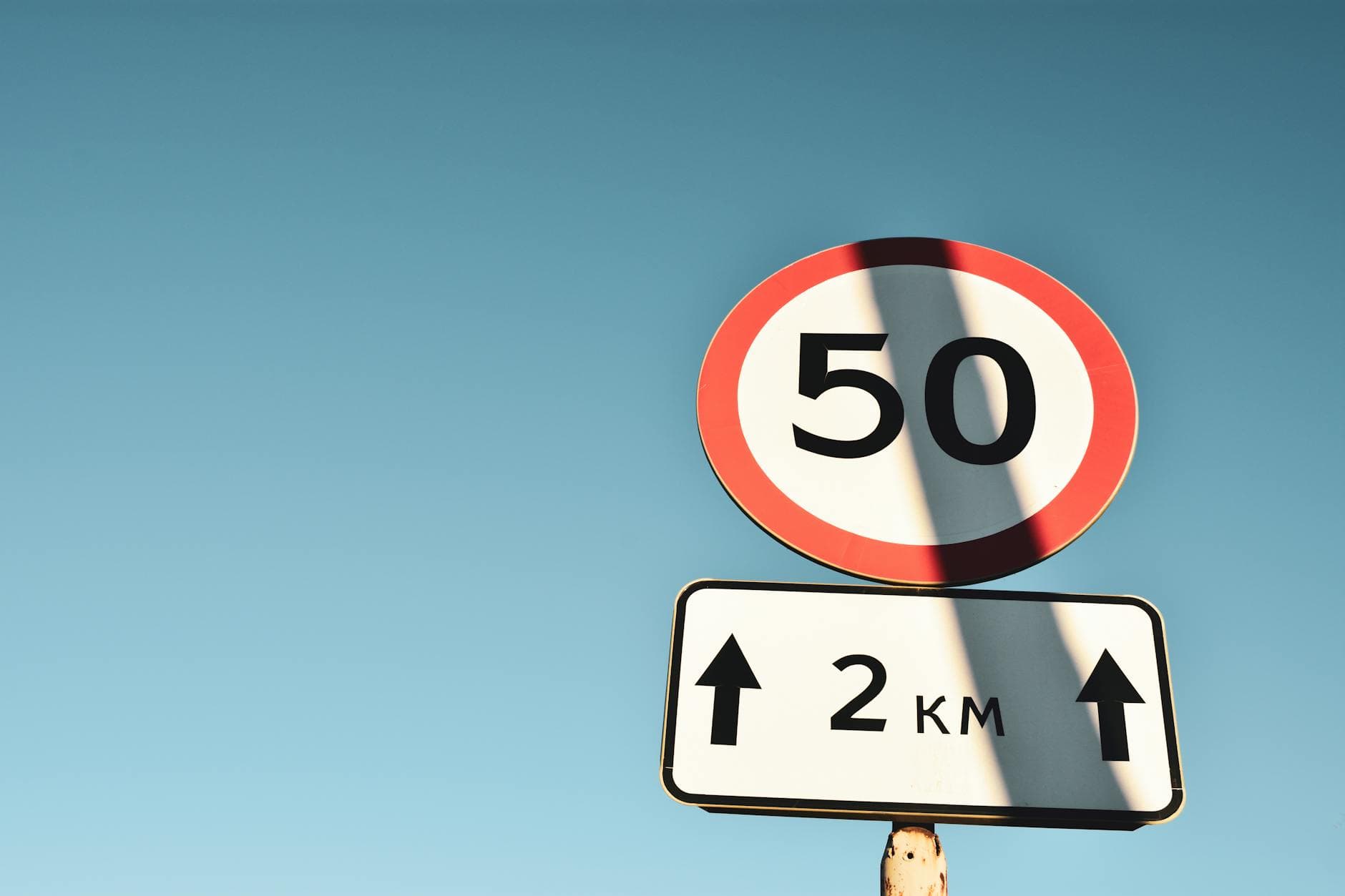
The theory test is called the γραπτή εξέταση in Greek. You sit it at a Department of Road Transport office. The good news for foreigners is that you can take it in English. You do not need to read Greek to pass.
The test is computer-based. You sit at a screen and answer multiple-choice questions. The questions cover road signs, traffic rules, and safe driving behaviour. Speed limits and distances are measured in kilometres and km/h, as Cyprus uses the metric system.
The test is not something you can walk into cold. You need to study. The Department of Road Transport provides official study materials. Many driving schools also run theory classes or give you access to practice question banks. Use them.
Here are some things to focus on:
- Road signs, especially warning signs and priority signs
- Right of way rules, including at roundabouts
- Speed limits for different road types
- Safe following distances
- Rules around overtaking, parking, and lights
If you fail the theory test, you can rebook and try again. There is a waiting period before you can resit. Your driving school can advise on timing.
Once you pass the theory test, you get a certificate or confirmation that allows you to book the practical test. The two tests are linked - you must pass theory before you can sit the practical.
What happens at the practical test?
The practical test is the one that makes most people nervous. It is conducted by an official examiner from the Department of Road Transport. You drive on real public roads, not a closed course.
The examiner sits in the passenger seat. They observe how you handle the car, how you respond to traffic, and whether you follow the rules. They will not trick you, but they will watch carefully.
The test typically covers:
- Moving off and stopping safely
- Turning, reversing, and parking
- Handling junctions, roundabouts, and traffic lights
- Speed management and awareness of other road users
- General observation and use of mirrors
Cyprus roads can be busy and sometimes unpredictable. Stay calm. Do what you have been trained to do. Examiners understand that nerves happen, but they are looking for safe, controlled driving.
The car used for the test is usually your instructor's dual-control car. This means your instructor will be in the back seat as a passive observer - they cannot intervene or coach you during the test itself.
If you fail, you can rebook. Your examiner will tell you what went wrong. Use that feedback. Go back to your instructor, work on the weak areas, and try again. Most people who fail the first time pass on the second attempt.
The practical test is booked through the Department of Road Transport. Your driving school will usually help you book it once they believe you are ready.
What happens after you pass?
Passing the practical test is a great moment. But you are not quite done yet.
After you pass, you apply for your full driving licence at the Department of Road Transport. You submit your test pass certificate along with your documents. The licence you receive is a standard EU-format card - the pink credit-card-sized document that is recognised across all EU member states.
There may be a short wait for the physical card to be produced. In the meantime, you may be given a temporary document confirming you are licensed to drive.
Your licence will show the category of vehicle you are allowed to drive. A standard car licence is Category B. If you want to drive motorcycles, trucks, or buses, those require separate tests and categories.
Keep your licence safe. If it is lost or stolen, you report it to the Department of Road Transport and apply for a replacement. There is a fee for this.
Cyprus, as an EU member, issues licences that are valid throughout the European Union. That is a real practical benefit. If you move to another EU country later, your Cyprus licence is recognised there.
For anyone making sense of the full picture - lessons, schools, tests, and more - ClickClickDrive Cyprus is a useful resource to explore alongside the official Department of Road Transport information.
Getting a driving licence in Cyprus takes time and patience, but thousands of people do it every year. Foreigners, locals, young people getting their first licence - the system handles them all. Go in prepared, take the process step by step, and you will get there.
About the Author

Co-Founder, ClickClickDrive
Matthieu is Co-Founder and CMO of ClickClickDrive, a marketplace that makes finding the right driving school effortless for learners across Europe. He built the platform from zero to over 2.5 million monthly organic visitors, reaching 30% B2C market share in Germany.
FAQ
How long does the whole process take to get a driving licence in Cyprus?
Most people complete the process in three to six months, depending on how quickly they book lessons and tests. The theory and practical tests both require booking slots at the Department of Road Transport, which can have waiting times. Starting your lessons regularly and booking tests as soon as you are eligible will keep things moving.
Can I take the theory test in English?
Yes. The theory test is available in both Greek and English. You choose your language when you book the test at the Department of Road Transport. The questions cover road signs, rules, and safe driving, and the content is the same in both languages.
Do I need a medical certificate even if I am young and healthy?
Yes. A medical certificate from a registered doctor in Cyprus is a required document for your learner's licence application, regardless of your age or health. It is a standard check and most general practitioners in Cyprus can complete it quickly.
What happens if I already have a driving licence from outside the EU?
If your licence is from outside the EU, you generally cannot simply exchange it. You may need to go through some or all of the full test process in Cyprus. The specific rules depend on your country of origin. The [licence guide for foreigners](/en/blog/how-to-get-driving-licence-cyprus-foreigner) has more detail on this.
Is my Cyprus driving licence valid in other EU countries?
Yes. Cyprus is an EU member state, and the driving licence it issues follows the standard EU format. This means it is recognised and valid in all other EU member states. If you later move to another EU country, you can typically drive on your Cyprus licence there.