
Cyprus Driving Licence Categories Explained (A to D)
 8 July 2026 · Matthieu Tissot
Cyprus driving licences are divided into categories from AM to D, covering mopeds, motorcycles, cars, lorries, and buses, each with its own minimum age and vehicle weight limits. Category B is the standard car licence, while categories C and D are required for commercial trucks and buses. For the most current fees and requirements, always check with the Department of Road Transport (TOM).
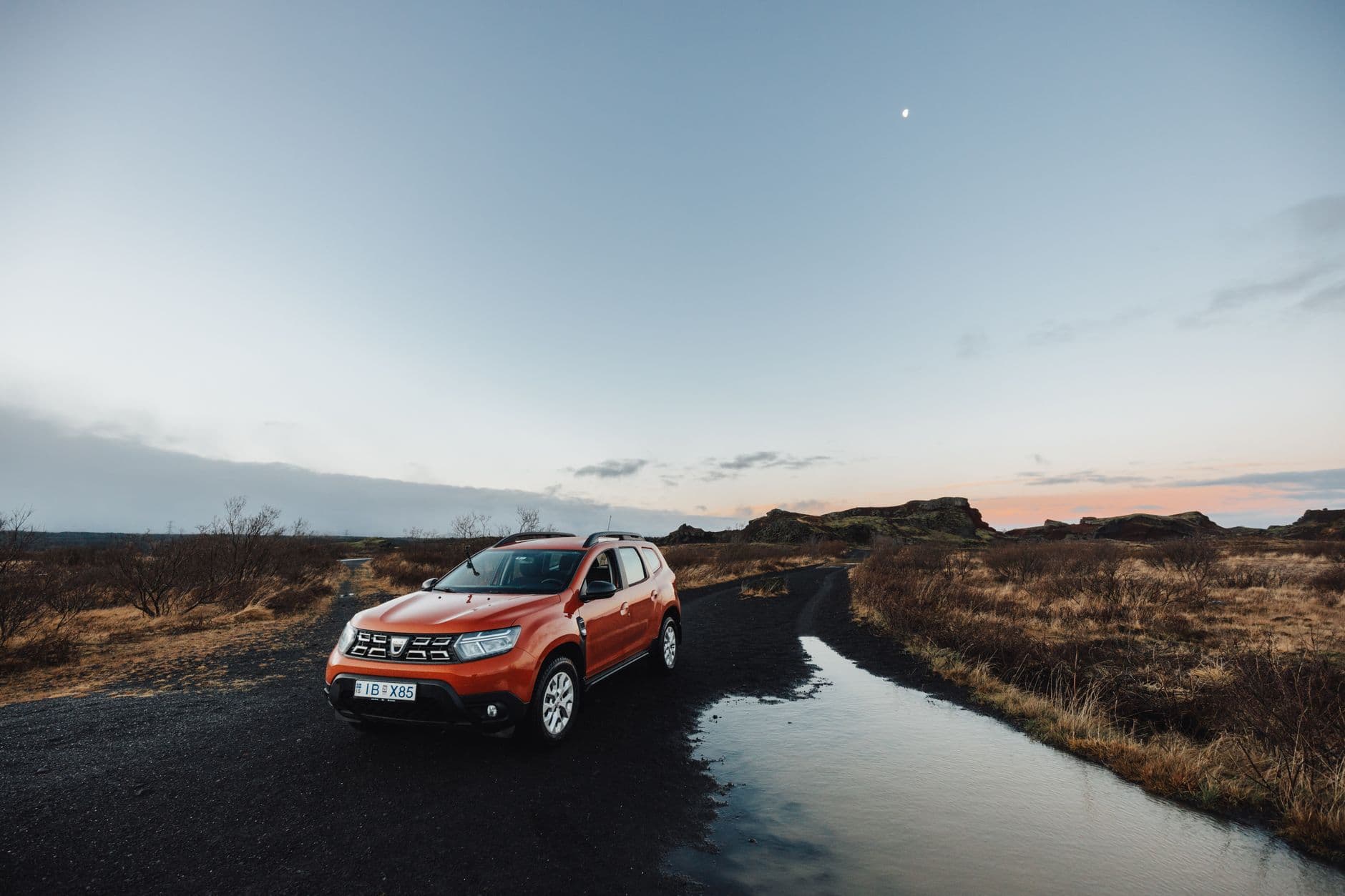
Most people think a driving licence is just a driving licence. In Cyprus, though, the card in your wallet tells a more detailed story. It lists specific codes that determine exactly what you are legally allowed to drive. Get the wrong category - or miss an upgrade you needed - and you could be driving illegally without knowing it.
What are the driving licence categories in Cyprus?
Cyprus follows the EU harmonised system set out in Directive 2006/126/EC. Cyprus has fully transposed this into national law. That means every category you see on a Cyprus licence matches the standard used across EU member states.
The categories run from AM at the lighter end, through A1, A2, and A for motorcycles, then B and BE for cars and towing, and up to C and D for heavy lorries and buses. Each step up brings a higher minimum age and, for the most part, requires you to already hold the category below it.
Each category builds on the one before it, check age and requirements with the Department of Road Transport
The physical licence itself is a credit-card-format EU document. For category B and above, it is valid for ten years. For the professional categories C and D, it runs for five years and requires medical checks to renew. The Department of Road Transport (ΤΟΜ) is the authority that issues, renews, and exchanges all licences in Cyprus. They are the only reliable source for current fees and medical standards.
For a broader look at the whole licensing process, the complete Cyprus driving licence guide covers background, history, and the legal framework in more depth.

Categories AM, A1 and A2: Mopeds and smaller motorcycles
These three categories are the entry point for two-wheeled travel in Cyprus. Each one opens up a slightly more powerful machine.
Category AM is the starting point. It covers mopeds and light quadricycles with a maximum design speed of 45 km/h. You can apply at 16 years old. If you grew up riding a small moped around your village, this is the category that made it legal.
Category A1 steps things up. It allows you to ride motorcycles up to 125cc and up to 11 kW of power. The minimum age is also 16 in Cyprus. This category suits riders who want something more capable than a moped but are not ready for a full-sized bike.
Category A2 is aimed at newer adult riders. It permits motorcycles with a maximum power of 35 kW. The power-to-weight ratio must not exceed 0.2 kW per kg. You need to be at least 18 years old. Many expats coming from countries with a single motorcycle category find A2 unfamiliar. Think of it as a learner stage for adults who want real motorcycle performance without the full risk of unrestricted power.
Moving through these categories is called progressive access. It is designed to build rider skill over time rather than throwing a novice onto a large, powerful machine straight away. Each step is a genuine jump in what the bike can do. The theory and practical tests get harder too.
If you are weighing up the cost of lessons across these categories, take a look at driving lesson costs in Cyprus for a realistic idea of what to budget.
Category A: The full motorcycle licence
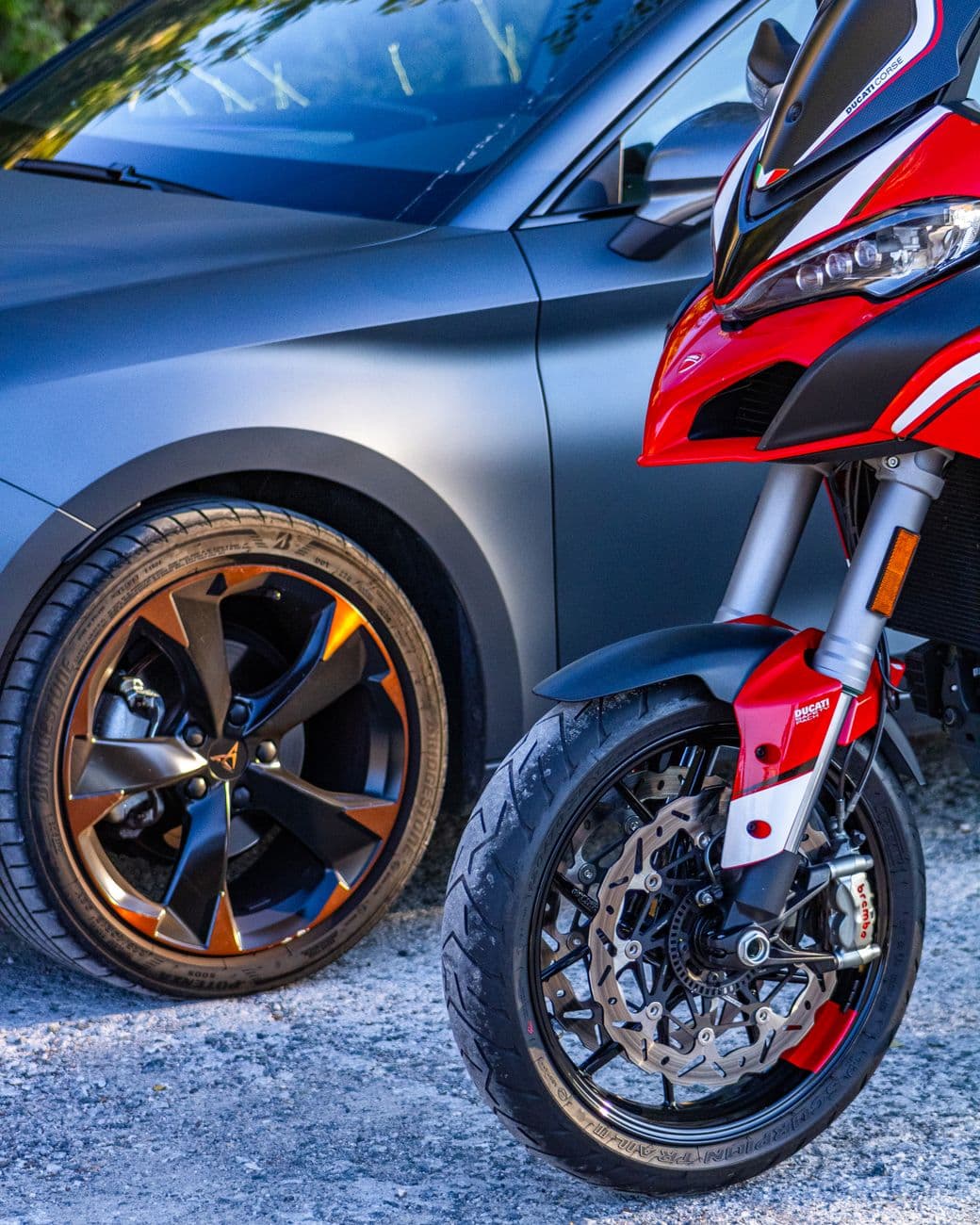
Category A is the unrestricted motorcycle licence. With it, you can ride any motorcycle on the road with no power or engine size limit. This is what most serious riders are working towards.
There are two ways to reach it. The first is progressive access. If you have held a category A2 licence for at least two years, you can move up to category A from age 20. The second is direct access, where you skip the lower categories and test straight for category A at age 24.
Most people go the progressive route. It takes longer, but the two years on an A2 bike make you a noticeably better rider by the time you sit the full test. Instructors at Cypriot riding schools will tell you the same thing.
The practical test for category A is demanding. You will be assessed on slow-speed control, emergency braking, swerving, and road riding. Failing on the road section is common among candidates who have not spent enough time on a large bike before test day.
One thing worth knowing: holding category A does not automatically mean you can drive a car. The categories are separate. A motorcyclist who also wants to drive a car must obtain category B independently.
For a detailed look at what to expect on test day, the Cyprus driving test guide breaks down both the theory and practical elements.
Category B and BE: Cars and trailers
Category B is the one most people mean when they say "driving licence." It is the standard car licence in Cyprus, and for the majority of residents and expats, it is the only one they will ever need.
Category B covers vehicles up to 3,500 kg with no more than eight passenger seats. The minimum age is 18 years. That covers everything from a small city hatchback to a large family SUV. It also covers light vans below the 3,500 kg threshold.
Holders of a category B licence in Cyprus may also drive certain light electric vehicles and quadricycles, in line with EU regulations. The exact classifications can shift as new vehicle types appear on the market, so check with the Department of Road Transport (ΤΟΜ) for the current position.
Category BE is an extension, not a standalone licence. It allows you to tow a trailer where the trailer exceeds 750 kg and the combined weight of the vehicle plus trailer goes above 3,500 kg. You must already hold category B before you can apply for BE.
This matters more than people expect. If you are towing a horse box, a large boat, or a heavy caravan, you may already be over the threshold that requires BE. Driving over the limit without the right category is an offence.
The process for getting category B in Cyprus involves theory, a hazard perception test, and a practical road test. If you are starting from scratch, the step-by-step driving licence guide walks you through each stage in plain language.
Expats who already hold a licence from another EU country do not need to retake the tests. Read more about exchanging an EU driving licence in Cyprus to understand the process and what paperwork you will need.
Categories C and D: Trucks, buses, and professional licences

These are the professional categories. They open the door to commercial driving as a career, but they come with stricter rules, mandatory medical checks, and a shorter validity period.
Category C covers lorries over 3,500 kg. If the vehicle is between 3,500 kg and 7,500 kg, category C1 is sufficient. For heavier lorries above that threshold, full category C is required. Both C and C1 require you to already hold a category B licence.
Category D covers buses with more than eight passenger seats. Category D1 is the subcategory for minibuses with between nine and sixteen passenger seats. Again, both require prior category B.
Because categories C and D are used professionally, the licence is only valid for five years rather than ten. Renewal requires a medical examination. This is not optional or easy to overlook - the Department of Road Transport checks compliance, and operators face liability if their drivers hold expired professional licences.
If you drive lorries or buses for work, you will also need to be aware of driver Certificate of Professional Competence (CPC) requirements under EU law. That is a separate qualification sitting alongside the licence category itself.
The age requirements for C and D mirror the EU standard. For C1 and D1 the minimum age is 18, while full C and D typically require age 21, though training schemes may allow earlier access in some cases. Verify current age rules directly with the Department of Road Transport (ΤΟΜ), as these can depend on training routes.
Fees for professional category tests and licence issue are not covered here. Check current fees with the Department of Road Transport before you book.
How to choose the right category for your needs
Picking the right category is simpler than the full list makes it look. Start with the vehicle you actually want to drive, then work backwards.
If you want to ride a small moped for commuting in a town, category AM is enough. If you want a proper motorcycle with real engine power, plan for the A pathway and expect a few years and multiple tests before you reach unrestricted riding.
For most people in Cyprus - expats, new residents, first-time drivers - category B is the answer. It covers the vast majority of cars and vans on the road. Add BE if you plan to tow anything substantial.
Which category do you need?
Select what you want to drive
If you drive for a living or want to, the question is which vehicle your employer uses. Parcel delivery vans under 3,500 kg need only category B. A rigid lorry or an articulated truck needs C. A coach or large bus needs D.
Here is a quick reference to match your situation:
- Moped or low-speed quadricycle: Category AM, from age 16
- Lightweight motorcycle up to 125cc: Category A1, from age 16
- Mid-range motorcycle up to 35 kW: Category A2, from age 18
- All motorcycles, no limit: Category A, from age 20 (progressive) or 24 (direct)
- Standard car or light van: Category B, from age 18
- Car plus heavy trailer: Category BE (requires B first)
- Medium or heavy lorry: Category C1 or C (requires B first)
- Minibus or full-size bus: Category D1 or D (requires B first)
If you are a foreigner living in Cyprus and unsure where your existing foreign licence fits, the article on how to get a Cyprus driving licence as a foreigner covers recognition rules and what you need to do.
Next steps to get or upgrade your licence in Cyprus
Once you know which category you need, the process follows a set path. Here is how it typically works:
- Gather your documents - identity card or passport, proof of Cyprus residency, and any existing licence if you are upgrading or exchanging.
- Visit the Department of Road Transport (ΤΟΜ) or an authorised driving school to register and book your theory test.
- Pass the theory test and, where required, the hazard perception element.
- Complete the required hours of practical training with a licensed instructor.
- Pass the practical road test.
- Submit your application and pay the applicable fees. Check current fees with the Department of Road Transport before you go.
For categories C and D, add a medical examination to that list before you even start. The exam must confirm that you meet the health standards for professional driving.
If you are upgrading from one category to another - say, from B to C - you do not repeat the full B process. You sit the theory and practical tests only for the new category. The existing licence stays valid throughout.
Driving schools in Cyprus are licensed and inspected. Choose one that regularly teaches the specific category you need. A school that focuses on cars may not have the right vehicle or instructor for a category A motorcycle test.
The timeline from first registration to holding a full licence varies. For category B, candidates who prepare well can complete the process in a few months. Professional categories take longer because of medical steps and more complex testing.
Getting the right category from the start saves you time, money, and legal trouble. There is no shortcut worth taking. The rules exist because the vehicle classes genuinely carry different risks, and Cypriot law - aligned fully with EU standards - takes that seriously.
---
About the Author

Co-Founder, ClickClickDrive
Matthieu is Co-Founder and CMO of ClickClickDrive, a marketplace that makes finding the right driving school effortless for learners across Europe. He built the platform from zero to over 2.5 million monthly organic visitors, reaching 30% B2C market share in Germany.
FAQ
What is the minimum age to get a driving licence in Cyprus?
The minimum age depends on the category. For AM and A1 it is 16, for A2 and B it is 18, and for full category A it is 20 via progressive access or 24 via direct access. Professional categories C and D have their own age rules, so confirm the current requirements with the Department of Road Transport.
Can I drive a car in Cyprus with only a motorcycle licence?
No. A motorcycle licence, even the unrestricted category A, does not cover cars. Categories A and B are separate. You need to obtain category B through its own theory and practical tests if you want to drive a car legally in Cyprus.
Do I need a new test if I already hold an EU driving licence?
If your licence was issued by another EU member state, you can exchange it for a Cyprus licence without retaking the tests. The process involves paperwork and a visit to the Department of Road Transport. For a full breakdown, see the article on [exchanging an EU driving licence in Cyprus](/en/blog/exchange-eu-licence-cyprus).
How long is a Cyprus driving licence valid?
For category B and above, the licence is valid for ten years. For professional categories C and D, validity is five years, and renewal requires a medical examination. The Department of Road Transport manages all renewals and can confirm current medical standards.
What is the difference between category C and category C1?
Category C1 covers lorries with a maximum authorised mass between 3,500 kg and 7,500 kg. Full category C covers lorries heavier than that, with no upper weight limit set by the category itself. Both require you to already hold a category B licence before you can apply.