
Cyprus Road Signs: The Complete Test Guide
 12 July 2026 · Matthieu Tissot
For the Cyprus theory test you need to know three main categories of road signs: mandatory signs (circular with a red border or blue background), warning signs (triangular with a red border), and informational signs (rectangular in blue, green, or white). Cyprus road signs follow the Vienna Convention and often appear in both Greek and English on major roads. Studying each category systematically and practising with official Department of Road Transport sample questions is the most effective preparation strategy.
Road signs are everywhere in Cyprus. You pass them every day without thinking twice. But when you sit down for the theory test, you need to know exactly what each one means and why it is there. This guide breaks down every major category tested in the exam, so you can walk in feeling ready.
Why are road signs so important for the Cyprus theory test?
Road signs are not just a small part of the Cyprus theory test. They are a major chunk of it. The Department of Road Transport (Τμήμα Οδικών Μεταφορών, ΤΟΜ) sets the questions, and sign recognition comes up repeatedly throughout the exam. Miss too many, and you will not pass.
There is a practical reason for this focus. Signs tell drivers what to do, what to expect, and where to go. Getting them wrong on the road causes accidents. The test reflects that reality.
Cyprus drives on the left, which is a holdover from British colonial rule. This affects how some directional signs are laid out and where signs are placed relative to the road. If you have driven in the UK, some of this will feel familiar. If you come from a right-hand-drive country, pay extra attention to direction signs.
The test itself is administered by the Department of Road Transport under the Ministry of Transport. You can find detailed information about the process in this Cyprus driving test guide. Candidates must be at least 17 years old to apply for a Category B (car) licence and must pass the theory test before moving on to practical training.
The question bank covers signs from all three main categories. Examiners expect you to identify a sign from its shape and colour alone, not just from its text or symbol. That is why learning the visual logic behind each category matters as much as memorising individual signs.
Check with the Department of Road Transport (ΤΟΜ) for the current pass mark and any changes to the question bank before you sit the exam.
What is the difference between mandatory, warning, and informational signs?
The three categories of road signs in Cyprus look very different from each other. Once you understand the visual code, you can often work out what a sign means even if you have never seen it before.
Mandatory signs are circular. They either have a red border on a white background or a blue background. Red-border signs tell you what you must not do - things like no entry or speed limits. Blue-background signs tell you what you must do - things like turn left or use a specific lane. All road users must obey these signs. No exceptions.
Warning signs are triangular with a point at the top and a red border. The background is usually white or yellow. These signs do not give you an order. They alert you to a hazard or a change in road conditions ahead. Your job is to read the situation and respond safely.
Informational and directional signs are rectangular or square. Their colour depends on the type of road. Blue is common on motorways and some urban roads. Green appears on expressways and major routes. White is used for local roads and place names.
The shape tells you immediately what type of sign you are looking at
This colour-and-shape system comes from the Vienna Convention on Road Signs and Signals. Cyprus is a signatory to that convention, which means the signs here are broadly aligned with those used across Europe. If you have driven in Greece, France, or Italy, the logic will feel familiar, even if the symbols differ slightly.
Understanding this three-way split is the foundation of everything else. Get this right first, then build on it sign by sign.
Mandatory signs: which ones do you need to know by heart?
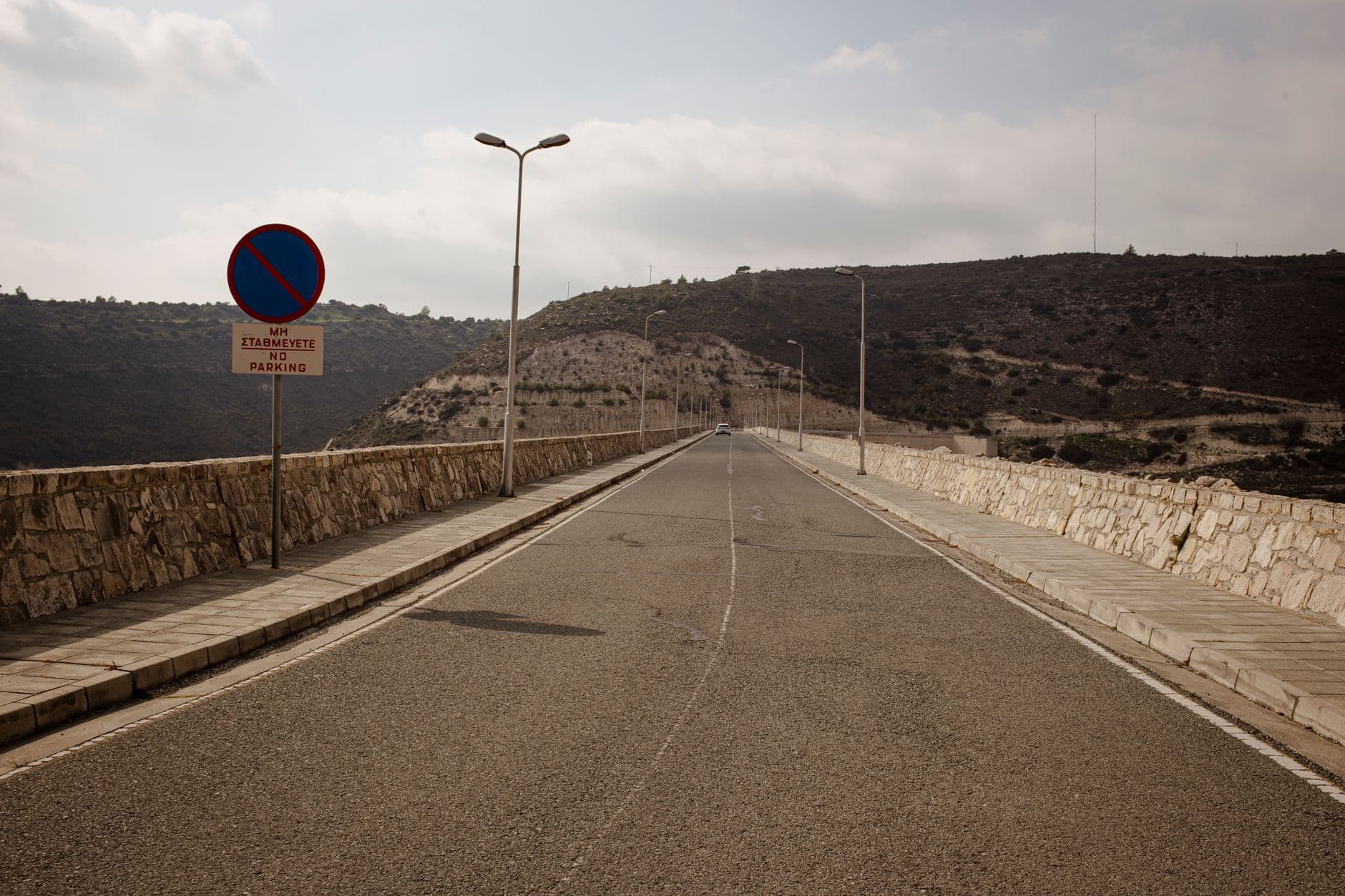
Mandatory signs carry the most legal weight. Ignoring one is not just a test failure - on the road it can mean a fine or worse. Here are the types you will definitely see in the exam.
Prohibition signs use the red-border circle. Common examples include:
- No entry (a plain red circle with a white horizontal bar)
- Speed limit signs (the number inside a red-border circle - for example, 100 km/h on motorways)
- No overtaking
- No parking or no stopping
- No U-turn
Obligation signs use a blue circle. These tell you what action you must take:
- Turn left or right ahead
- Go straight
- Keep left or keep right (relevant in Cyprus because of left-hand traffic)
- Minimum speed
- Mandatory cycle lane
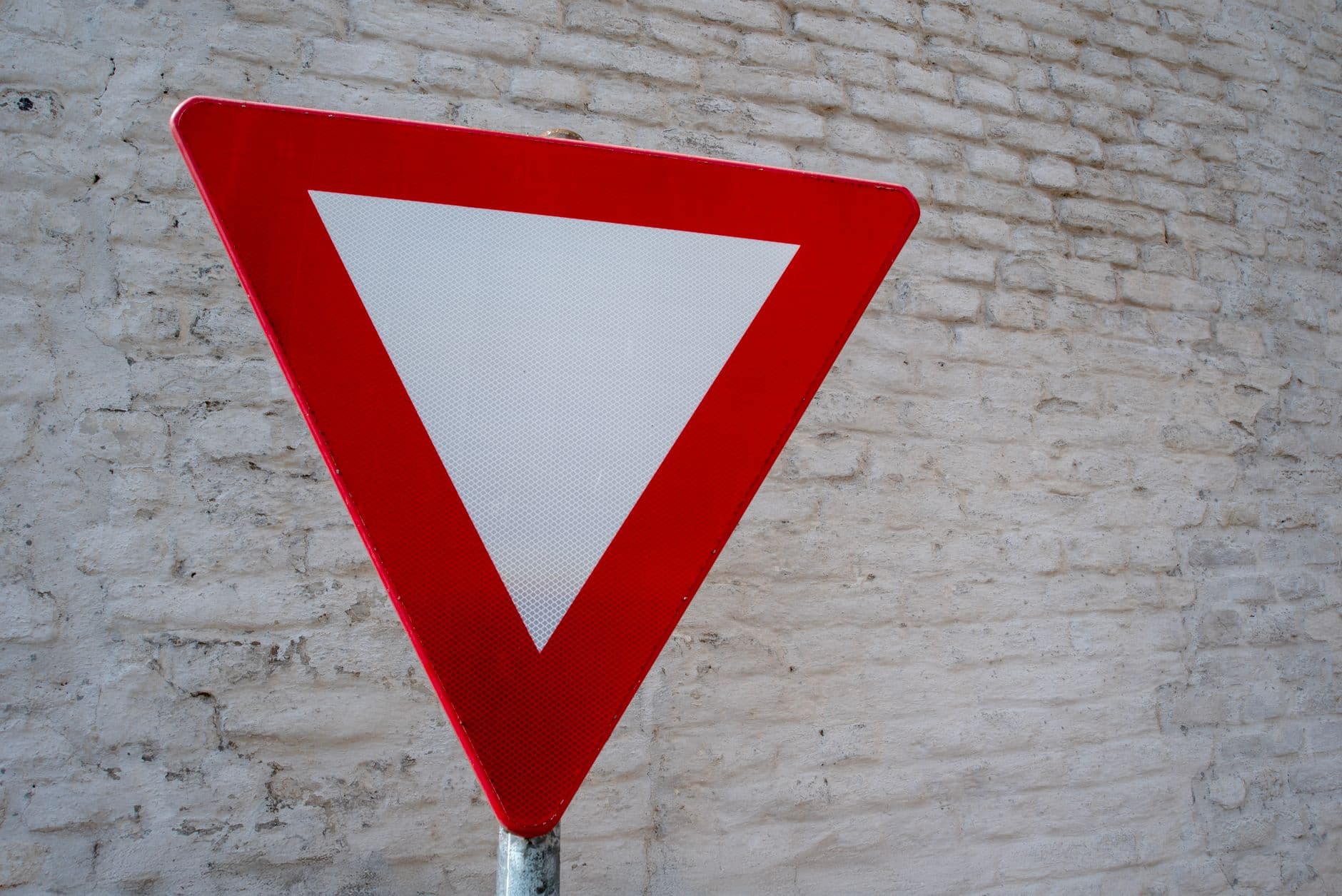
Two signs deserve special attention. The Stop sign in Cyprus is the international octagonal red design with the word STOP in white. You must come to a complete stop, even if the road looks clear. No rolling through. The Give Way sign is an inverted triangle with a red border. You will see it at junctions where you do not have priority.
For a full breakdown of how these signs connect to each licence class, the Cyprus driving licence categories page is a useful reference.
Speed limit signs are tested heavily. The motorway limit of 100 km/h is displayed on mandatory circular signs at motorway entry points and after intersections. Always check with the Department of Road Transport (ΤΟΜ) for any updates to speed limits before your test.
Warning signs: how do you recognise road hazards ahead?
Warning signs follow one clear rule: triangle, red border, white or yellow background. If you see that combination, the sign is telling you something needs your attention ahead. It is not an order. It is information. What you do with it is your responsibility.
The symbol inside the triangle tells you the type of hazard. The exam will test you on a wide range of these. Common warning signs in Cyprus include:
- Crossroads ahead
- T-junction ahead
- Bend or series of bends
- Slippery road surface
- Pedestrian crossing ahead
- Children crossing (often near schools)
- Animals on the road
- Road narrows
- Traffic signals ahead
- Uneven road or speed bumps
Some signs also carry a supplementary plate below them. This is a smaller rectangular sign that gives extra detail - for example, the distance to the hazard or the length of a danger zone. These plates are also tested.
Warning signs are placed a set distance before the hazard so you have time to react. On a motorway or faster road, they appear further in advance than on a local road. The exam may show you a sign and ask what action you should take in response. The correct answer is always to reduce speed and be ready to stop or react - not to ignore it because the road looks fine.
Pay attention to signs that look similar but mean different things. A sharp bend sign and a double-bend sign are both triangular but require different responses. Train yourself to read the symbol inside, not just the shape of the sign.
Informational and directional signs: how do they guide you on the road?
Informational signs cover a wide range of uses. Some direct you to a destination. Others tell you what facilities are nearby. Some mark the start or end of a rule. All of them are rectangular or square.
Direction and route signs are among the most visible on Cyprus roads. On motorways and major routes, these tend to be green or blue with white text. Place names on major roads often appear in both Greek and English, which is helpful if you are not a Greek speaker. This bilingual approach is common in tourist areas and on routes connecting major cities.
Facility and service signs are usually blue with a white symbol. They point you toward petrol stations, hospitals, parking areas, rest stops, and similar amenities. The exam does test these, though not as heavily as mandatory or warning signs.
Urban information signs appear on white rectangular boards with black text. They include street names, zone boundaries, and local route markers.
Zone signs mark the beginning and end of certain rules. For example, a sign marking the start of a 30 km/h zone looks different from a plain speed limit sign. It uses a different format to show the rule applies throughout an area, not just at that point.
Because Cyprus drives on the left, directional sign layouts place destinations on the left-hand side of arrows in many cases. This is the opposite of what drivers from mainland Europe expect. It is worth spending time on these signs if you learned to drive elsewhere.
If you want to see how directional signs fit into the broader licensing process, the step-by-step driving licence guide covers the full journey from application to passing your test.
Common mistakes candidates make on road signs in the Cyprus theory test
Most people who fail the road signs section of the theory test make the same few errors. Knowing what they are can help you avoid them.
Confusing similar-looking signs is the most common problem. Warning and mandatory signs can look alike if you only glance at the shape. A triangular sign and a circular sign with a red border are very different in meaning, but under exam pressure some candidates mix them up. Drill the shapes until they are automatic.
Ignoring supplementary plates is another issue. Some questions show a sign with a plate beneath it. The plate changes the meaning or limits the application of the sign. If you only read the main sign, you will get the question wrong.
Assuming a sign means the same as one from your home country catches out many foreign residents. Cyprus follows the Vienna Convention, but small differences exist. Do not assume. Look up the Cypriot version of every sign you think you know.
Not reading the question carefully is a general exam trap. The question might ask what you should do, not what the sign means. These are different things. A warning sign for a slippery road means you should slow down and drive carefully - not that you must stop.
Overlooking blue obligation signs is common among candidates who focus too much on the red-border prohibition signs. Blue circular signs are equally important and appear in the exam regularly.
If you are preparing with a school, the driving schools in Nicosia and driving schools in Limassol directories can help you find an instructor who covers the theory content in detail.
How to study road signs effectively for the theory test?

Knowing what to study is half the battle. Here is a method that works for most candidates.
Start with the three categories. Before you learn individual signs, lock in the colour and shape code. Mandatory - circle. Warning - triangle. Informational - rectangle. Spend one study session on this alone until it is second nature.
Use a structured sign list. The Department of Road Transport publishes official study materials. Work through them in category order. Do not jump around. Finish mandatory signs before moving to warning signs, and so on.
Use flashcards. Put the image on one side and the meaning and required action on the other. Physical cards work. Digital apps work. What matters is active recall - testing yourself, not just reading.
Practise with official sample questions. The real exam uses multiple-choice questions. Get used to the format early. Some questions show a sign and ask for its meaning. Others describe a situation and ask which sign applies. Both types appear.
Review mistakes immediately. When you get a practice question wrong, do not move on. Find out why you got it wrong and study that sign again before the next session.
Test yourself on groups of similar signs. Line up all prohibition signs and test yourself on them as a group. Then do the same for obligation signs. This helps you spot differences between signs that look similar.
What shape do you see?
Select the shape and colour of the sign
For a broader look at what the licence process involves, the complete Cyprus driving licence guide gives you the full picture from start to finish.
Check with the Department of Road Transport (ΤΟΜ) for any updates to the official question bank or study materials before your exam date.
Road signs are learnable. They follow rules. They use a consistent visual system. With structured study and regular practice, most candidates can get this section of the test firmly under control. Give it the time it deserves, and it will not be the reason you fail.
About the Author

Co-Founder, ClickClickDrive
Matthieu is Co-Founder and CMO of ClickClickDrive, a marketplace that makes finding the right driving school effortless for learners across Europe. He built the platform from zero to over 2.5 million monthly organic visitors, reaching 30% B2C market share in Germany.
FAQ
Are Cyprus road signs the same as those used in other EU countries?
Cyprus follows the Vienna Convention on Road Signs and Signals, so the signs are broadly similar to those used across Europe. Small differences exist, so do not assume a sign means exactly the same thing as one from your home country. Always check the official Cypriot materials before your test.
Do I need to read Greek to understand road signs in Cyprus?
Not on most major roads. Signs on motorways, main routes, and tourist areas often appear in both Greek and English. However, some local roads use Greek only, and the theory test itself may present sign names or descriptions in Greek, so basic familiarity with common terms helps.
What shape is a Give Way sign in Cyprus?
A Give Way sign in Cyprus is an inverted triangle with a red border, identical in form to those used across EU member states. You will see it at junctions where another road has priority over the one you are on.
Is the Stop sign in Cyprus different from those in other countries?
No. The Stop sign in Cyprus uses the international octagonal red design with the word STOP in white letters. You are required to come to a complete stop regardless of traffic conditions, even if the junction looks clear.
Where can I find the official study materials for the Cyprus theory test?
The Department of Road Transport (ΤΟΜ) publishes the official question bank and study resources. Check directly with the department for the most current materials, pass mark, and any fee information, as these details can change.